
Corps Commanders Note Indian Rhetoric on Indus Waters Treaty, Vow Continued Action Against India-Backed Terrorists
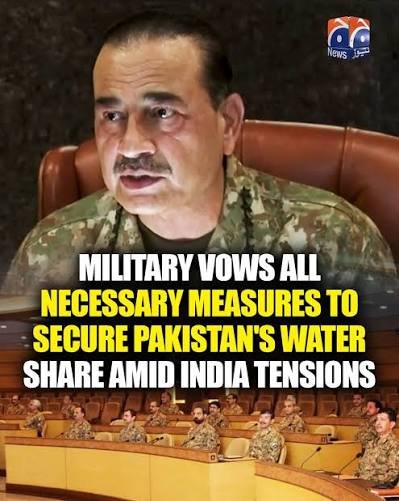
Table of Contents
ISLAMABAD: Field Marshal Syed Asim Munir, NI (M), HJ, Chief of Army Staff and Chief of Defence Forces, chaired the 276th Corps Commanders’ Conference (CCC) at General Headquarters (GHQ) in Rawalpindi on Monday.
The meeting commenced with Fateha for the martyrs of the Armed Forces, Law Enforcement Agencies and innocent civilians, with participants reaffirming that their sacrifices continue to serve as the bedrock of Pakistan’s security, unity and national resilience.
According to the Inter-Services Public Relations (ISPR), the forum conducted a comprehensive review of the prevailing security environment and expressed confidence in the Pakistan Armed Forces’ operational readiness, professionalism and combat capabilities.
The forum expressed deep concern over the continued exploitation of territory under the control of the Afghan Taliban by India-backed terrorist outfits, including Fitna al Khawarij (FAK) and Fitna al Hindustan (FAH), to coordinate and carry out attacks inside Pakistan.
It stressed that durable peace and stability in the region can only be achieved by preventing Afghan Taliban-controlled territory from being used by Indian-sponsored terrorist proxies, adding that the Afghan Taliban authorities bear responsibility for ensuring such elements are not allowed to operate from their soil.
The forum reaffirmed Pakistan’s unequivocal right to defend its citizens against terrorism, stating that the Armed Forces would persist with intelligence-based operations targeting militant networks operating from Afghan Taliban-controlled territory under Operation Ghazab-lil-Haq.
Beyond military operations, the forum highlighted the urgent need to establish effective governance mechanisms in affected areas, focused on public service delivery, welfare and development. It stressed the importance of dismantling the terror-crime networks that continue to operate with support from vested interests and political patronage.
The forum observed that following the comprehensive setback faced by hostile elements in Mark-e-Haq, there has been a growing reliance on externally backed hybrid warfare tactics and disinformation campaigns aimed at creating instability.
It strongly condemned all forms of state-sponsored financing, facilitation and support for proxy elements, reaffirming that any efforts to undermine Pakistan’s stability through hybrid means would be met with strategic resolve and decisive action.

Reviewing the changing regional situation, the forum appreciated Pakistan’s constructive efforts in supporting dialogue, reducing tensions and promoting regional peace and stability.
It reiterated Pakistan’s commitment to resolving disputes through peaceful means, upholding international law and strengthening regional cooperation to tackle common security challenges.
Taking note of recent Indian statements regarding the Indus Waters Treaty (IWT), the forum reaffirmed the directives issued by the National Security Committee (NSC) on April 24, 2025. It expressed a firm resolve to take all necessary measures to safeguard Pakistan’s legitimate water rights and ensure the availability of its rightful share of water in accordance with government directives and the aspirations of the people of Pakistan.
The forum strongly condemned the ongoing human rights violations and alleged demographic changes in Indian Illegally Occupied Jammu and Kashmir (IIOJK), reiterating that Kashmir remains a core issue for Pakistan. It reaffirmed the country’s continued diplomatic, political and moral support for the Kashmiri people, emphasizing that lasting regional peace and stability require a resolution of the Kashmir dispute in accordance with United Nations Security Council resolutions.
In his closing remarks, the COAS and CDF directed commanders to ensure swift implementation of the multi-domain transformation plan in response to the changing nature of warfare. He stressed the need to maintain the highest levels of vigilance, operational preparedness and professional excellence while developing integrated responses to conventional, sub-conventional and hybrid threats, with a firm focus on protecting Pakistan’s sovereignty and national interests.
