
Iran Nears Oil Storage Limit Amid Ongoing Blockade
With the U.S. blockade continuing to restrict exports, analysts say Iran is running out of space to store its crude oil. The buildup of tens of millions of barrels could soon force production cuts, a move that may influence the direction of the conflict.
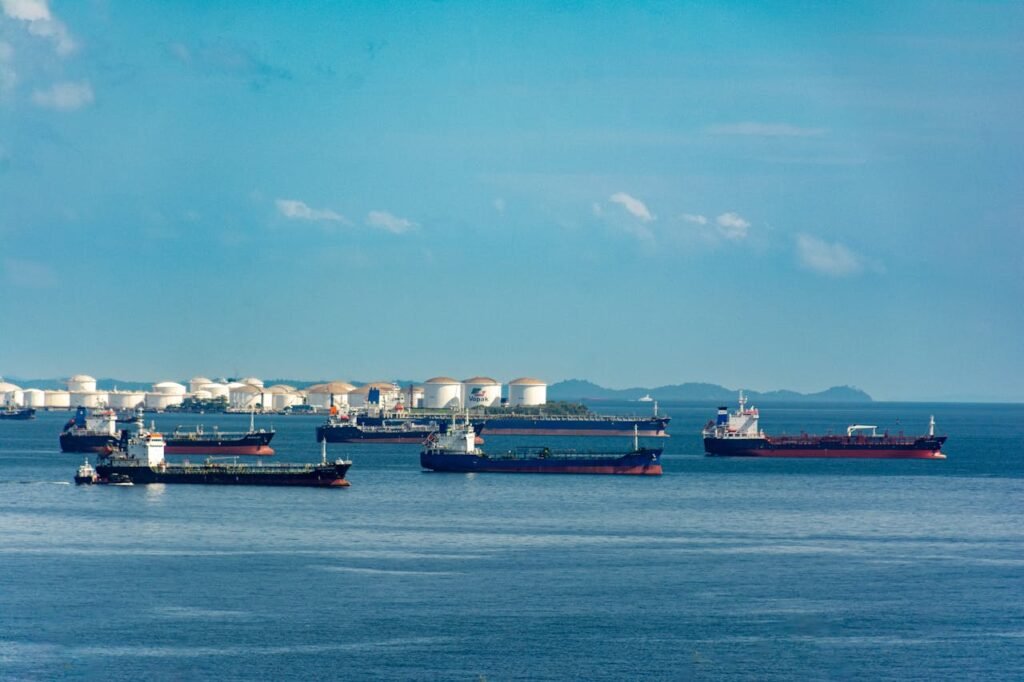
Iran is rapidly running out of space to store its oil as tankers that once shipped about 3.2 million barrels per day remain stranded at ports under a U.S. Navy blockade.
The blockade is part of a wider strategy to choke off Tehran’s roughly $13 billion in monthly oil revenue and pressure its energy sector. With exports largely halted, Iran may soon be forced to cut production as storage facilities approach capacity.
Since U.S. President Donald Trump imposed the blockade on April 13, an estimated 1.5 million barrels of crude have been added to storage each day due to the lack of export routes.
Those volumes are quickly accumulating. Industry estimates—including from Energy Aspects—indicate that by late April, around 68 million barrels of Iran’s total 122 million-barrel storage capacity had already been filled, leaving limited room for an additional 20 to 30 million barrels.
The mounting pressure appears to be unsettling Iranian leaders. In an April 28 Truth Social post, Trump claimed Iran had signaled it was nearing a “state of collapse” and was calling for the reopening of the Strait of Hormuz while grappling with internal challenges.
The president said he is confident Iran will soon yield to his demands, including ending its nuclear weapons program, cutting ties with militant groups, and giving up its claim and control over the strait.
Analysts say the timing of any such “state of collapse” depends on a simple calculation of time versus storage capacity. At the core is the so-called storage clock: the longer the standoff continues, the less space Iran has left to store its oil.
Analysts from Kpler and JPMorgan Chase estimated in late April that Iran’s remaining storage window could close within 15 to 22 days—placing a potential squeeze in mid- to late May if oil exports remain blocked.
In a separate April 29 report, Kpler analyst Homayoun Falakshahi said Iran is effectively being pushed into a storage-driven shutdown cycle.
“Iran is being pushed into a storage-driven shut-in cycle,” he wrote, warning that storage could reach saturation in about 20 to 24 days, forcing rapid production cuts.
Estimates differ widely on how quickly Iran could be forced into production shutdowns under the blockade. Energy Aspects suggested in late April that the pressure could take up to seven weeks—potentially extending into mid-June—before storage limits trigger widespread shut-ins.
Other assessments from Wood Mackenzie, the Atlantic Council, the Center for Strategic and International Studies, and the Center on Global Energy Policy place the timeline somewhere in the middle of those projections.
Still, some analysts argue Iran may already have exhausted its storage buffer. The Institute for the Study of War and the Critical Threats Project stated that storage capacity was effectively depleted by April 29.
Separately, the Foundation for Defense of Democracies projected a shutdown as early as April 25. Senior fellow Miad Maleki highlighted the importance of the “storage clock,” estimating Iran had about 20 million barrels of spare capacity on April 12 and warning that once full, production shutdowns could follow within roughly two weeks.
No Way Out
Iran’s oil and gas production is concentrated in four main regions. The Khuzestan fields, active since the 1960s, produce around 2.2 million barrels per day. West Karoun, near the Iraqi border, adds roughly 500,000 barrels per day.
In the south, Fars and Bushehr provinces along the Gulf are largely focused on offshore natural gas production, including output from South Pars—the Iranian extension of Qatar’s North Field, the world’s largest gas reservoir.
The fourth production zone is Iran’s Persian Gulf oil fields, with about 65% of output coming from three fields in the Kharg district.
Almost all infrastructure—roads, rail lines, and pipelines—ultimately converges on Kharg Island, an eight-square-mile coral outcrop about 300 miles north of the Strait of Hormuz. The island holds more than a quarter of Iran’s storage capacity and serves as the country’s main export terminal.
Around 90% of Iran’s crude exports are loaded from Kharg into supertankers, with up to ten vessels berthed at any given time.
