
Proposed NTP Seeks Major Cut in Vehicle Import Duties Amid Ministry Differences
ISLAMABAD;
The government’s proposed Auto Policy 2026-31 faces uncertainty as disagreements among ministries and concerns raised by the IMF continue to delay its finalisation.
Speaking before the National Assembly Standing Committee on Finance, Commerce Secretary Jawad Paul said auto-sector tariffs are being determined in accordance with the National Tariff Policy (NTP), which aims to promote trade liberalisation and reduce protectionist barriers.
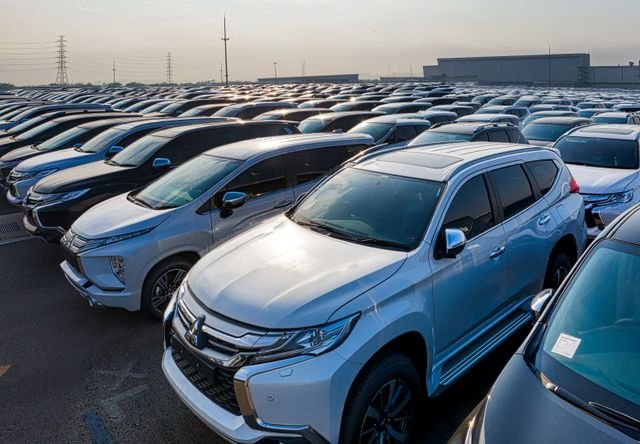
Under the NTP framework, customs duties on imported cars, jeeps, and auto parts could be reduced by 25% to 50%, potentially lowering vehicle prices for consumers while increasing competition for local manufacturers.
The commerce ministry has proposed reducing the maximum customs duty rate to 50%, lowering additional customs duties, and capping regulatory duties at 20% for FY2026-27. If implemented, the maximum tariff burden would fall to 74% from the current 156%.
However, the proposed reduction has become a major point of contention within the government. Officials are also grappling with IMF reservations over certain incentives, including reduced sales tax rates for hybrid and new energy vehicles.
With the current auto policy set to expire on June 30, the government is weighing whether to fully implement the tariff cuts or offset them with a higher federal excise duty to maintain protection for domestic assemblers. The National Assembly committee is expected to review the matter further before making its recommendations.
Auto Policy Faces Delays as Government Weighs Major Tariff Cuts on Imported Vehicles
Here’s a more concise news-style rewrite:
Commerce Secretary Jawad Paul informed the Senate Standing Committee that proposals for the second year of the National Tariff Policy (NTP) for FY2026-27 remain fully aligned with the approved roadmap, with no deviations reported so far.
As part of the policy, the government plans to further reduce customs duties, additional customs duties, and regulatory duties across most of the country’s 7,590 tariff lines. The maximum tariff rate, currently as high as 156%, is set to be cut to 74%.
Any revisions to sales tax or import duties must be approved through the federal budget, which is expected to be passed by the National Assembly before Wednesday. Meanwhile, the current auto policy is due to expire this month, and sources say a final draft has yet to be prepared for incorporation into tax legislation.
Auto Sector Reforms
Under the NTP, customs duties on auto parts will be reduced from 35% to 25% in FY2026-27. Tariffs on vehicles up to 800cc will drop from 50% to 30%, while duties on cars up to 1,000cc will decline from 55% to 35%.
For vehicles up to 1,500cc, duties will fall from 60% to 40%, and for cars up to 1,800cc, rates will decrease from 75% to 45%. Tariffs on vehicles above 1,800cc will be halved from 100% to 50%.
Sources said the Prime Minister’s Office is reluctant to allow substantial price reductions for luxury vehicles exceeding 2,000cc. One proposal under consideration is the imposition of a federal excise duty on these vehicles.
Differences remain between the commerce and industries ministries over the pace of tariff reductions. While the commerce ministry supports implementing the NTP target of reducing the maximum customs duty to 15% by 2030, the industries ministry favors maintaining higher duties to protect local assemblers.
According to the cabinet-approved policy, current customs duty slabs ranging from 20% to 50% will gradually be reduced to 15% by 2030. The existing 20% slab will fall to 10%, while the 15% slab will be cut to 5%.
Paul told the committee that the five-year NTP aims to reduce the simple average tariff rate to 13% from July. However, the rate is expected to stand at 13.77%, slightly above target due to smaller-than-planned reductions in the first year. Last year, average tariffs were reduced to 16.56%.
The second phase of tariff reforms is projected to have a revenue impact of Rs143.4 billion. Paul also noted that the Engineering Development Board has proposed equalizing tariffs on locally manufactured, imported, and used vehicles to create a more competitive market.
He added that the government’s tariff reform targets go beyond IMF requirements. While the IMF permits regulatory duties of up to 80%, the government plans to eliminate them entirely within five years. Likewise, although the IMF has not imposed a ceiling on customs duties, Pakistan has committed to reducing the maximum rate to 15% by 2030.
