
Bandar Abbas among locations struck as power outages reported
The Iranian port city of Bandar Abbas was among several locations hit in a new wave of strikes, with reports of explosions and widespread power outages in parts of the affected areas. Other targets reportedly included coastal locations near the Strait of Hormuz, as the latest escalation intensified tensions in the region.
Table of Contents
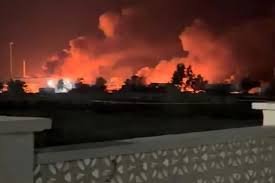
According to reports, the strikes disrupted electricity in some areas and damaged infrastructure. Iranian authorities also reported casualties and emergency response operations, while the United States said the attacks were aimed at military and strategic sites linked to maritime security following recent attacks on commercial shipping.
US launches fresh strikes on Iran as Strait of Hormuz tensions escalate
The United States military said on Wednesday it carried out a new wave of strikes against Iran aimed at keeping the Strait of Hormuz open to international shipping, following an attack on three commercial cargo vessels transiting the strategic waterway a day earlier.
The operation triggered retaliatory Iranian attacks on Kuwait and Bahrain, marking the latest escalation in the conflict and dealing a blow to diplomatic efforts to bring the war to an end.
The renewed hostilities came just hours after US President Donald Trump said he believed an interim ceasefire with Iran was effectively “over,” signalling a return to intensified military confrontation in the region.
In a statement posted on X, the US Central Command (CENTCOM) said its forces had begun carrying out additional strikes against Iran to weaken its ability to threaten freedom of navigation through the Strait of Hormuz.
“US Central Command forces have started conducting additional strikes against Iran to further degrade their ability to threaten freedom of navigation in the Strait of Hormuz,” CENTCOM said.
The United States accused Iran of carrying out “unjustified aggression” against commercial shipping and civilian crews navigating the Strait of Hormuz, saying it was responding to protect freedom of navigation through the strategic waterway.
Fresh US strikes hit several cities along Iran’s southern coast on Wednesday, triggering power outages in parts of the region. Iran retaliated with a second consecutive day of missile and drone attacks on Kuwait and Bahrain, both of which host US military bases.
Kuwait’s Defence Ministry said its air defence systems successfully intercepted incoming missiles and drones, while Qatar briefly issued an “elevated security threat” warning before lifting the alert.
A US official told Reuters, speaking on condition of anonymity, that Wednesday’s operation was larger in scale than the strikes carried out a day earlier.
President Donald Trump said the attacks were launched in retaliation for Iran’s alleged assault on commercial vessels transiting the Strait of Hormuz.
“If it happens again, it will get much worse!” Trump wrote on his Truth Social platform.
Iran’s control of the Strait of Hormuz — a strategic waterway that handled nearly one-fifth of global oil shipments before the war — has given Tehran significant leverage in its confrontation with the United States. While Iran has denied responsibility for recent attacks on commercial vessels, analysts say such incidents are intended to increase pressure during negotiations.
“The United States has yet to learn that bullying and breaking its commitments no longer come without consequences,” Iran’s chief negotiator, Mohammad Baqer Qalibaf, said in a post on X. “If you strike, you will be struck back. The Strait of Hormuz will reopen only under Iranian arrangements, not through US threats.”
The latest exchange of strikes has cast further doubt over efforts to transform the memorandum of understanding signed on June 17 into a lasting peace agreement. The conflict erupted on February 28 following US-Israeli strikes on Iran.
Asked before a NATO summit in Turkey whether the June agreement was effectively dead, US President Donald Trump replied: “To me, I think it’s over. I don’t want to deal with them.”
Trump later questioned the prospects of any future agreement, saying, “If we make a deal with Iran, I’m not sure it will stick. I found them to be very dishonourable people.”
Despite his comments, Trump said he did not expect the conflict to escalate into a full-scale war and remained uncertain about whether negotiations toward a permanent settlement would resume.
“I don’t think the war will restart,” he said. “Anything that happens is going to be over very quickly … and will only make it safer, including for oil.”
Oil prices rose in response to the latest escalation, with Brent crude futures climbing about 1% to $78.80 a barrel by 0054 GMT. However, prices remained well below their late-April high of more than $120 a barrel.
Iranian media reported that the latest US strikes targeted multiple sites along the country’s southern coastline, from the Strait of Hormuz to the Gulf of Oman, including the key port city of Bandar Abbas.
Among the locations hit were Bandar Abbas, home to Iran’s largest port and key navy and Revolutionary Guards facilities on the Strait of Hormuz, as well as Konarak and Chabahar, neighbouring coastal cities near Iran’s border with Pakistan.
Electricity had been restored to most areas of Chabahar after strikes knocked out power for some in the city, Mehr news agency reported, citing the local utility. Media also reported that a maritime traffic control tower in Chabahar was hit.
A firefighter was killed in a strike on the airport in the southeastern city of Iranshahr, state media reported. In northern Iran, a US attack hit a railway bridge near the town of Aqqala, according to Press TV.
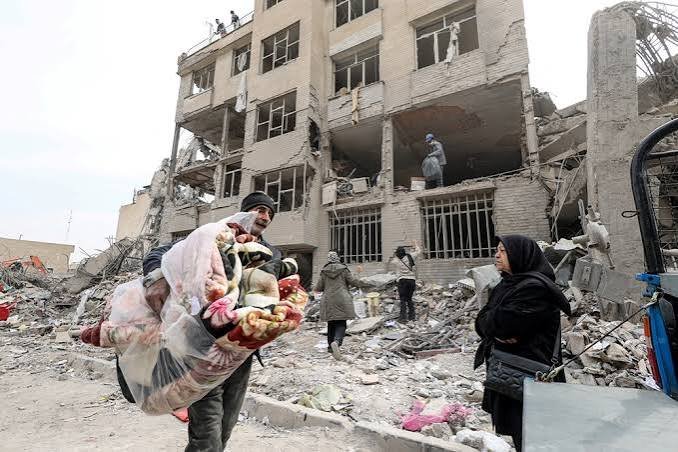
Prior to the fresh US attacks on Wednesday, Iranian Foreign Ministry spokesperson Esmaeil Baghaei had said US strikes had violated the memorandum by challenging a clause that “emphasises the Islamic Republic of Iran’s responsibility in determining arrangements for the safe passage of ships through the Strait of Hormuz”.
A spokesperson for parliament’s National Security Commission had said options for retaliation included withdrawing from the nuclear Non-Proliferation Treaty (NPT), changing Iran’s nuclear doctrine, and closing the Bab-el-Mandeb Strait at the mouth of the Red Sea, another crucial global shipping route.
In a letter to the United Nations Security Council on Wednesday, Iran’s mission to the UN accused the United States of “blatant violation of the Charter of the United Nations and its international obligations” and said its attacks violated the memorandum of understanding signed by the two countries.
